


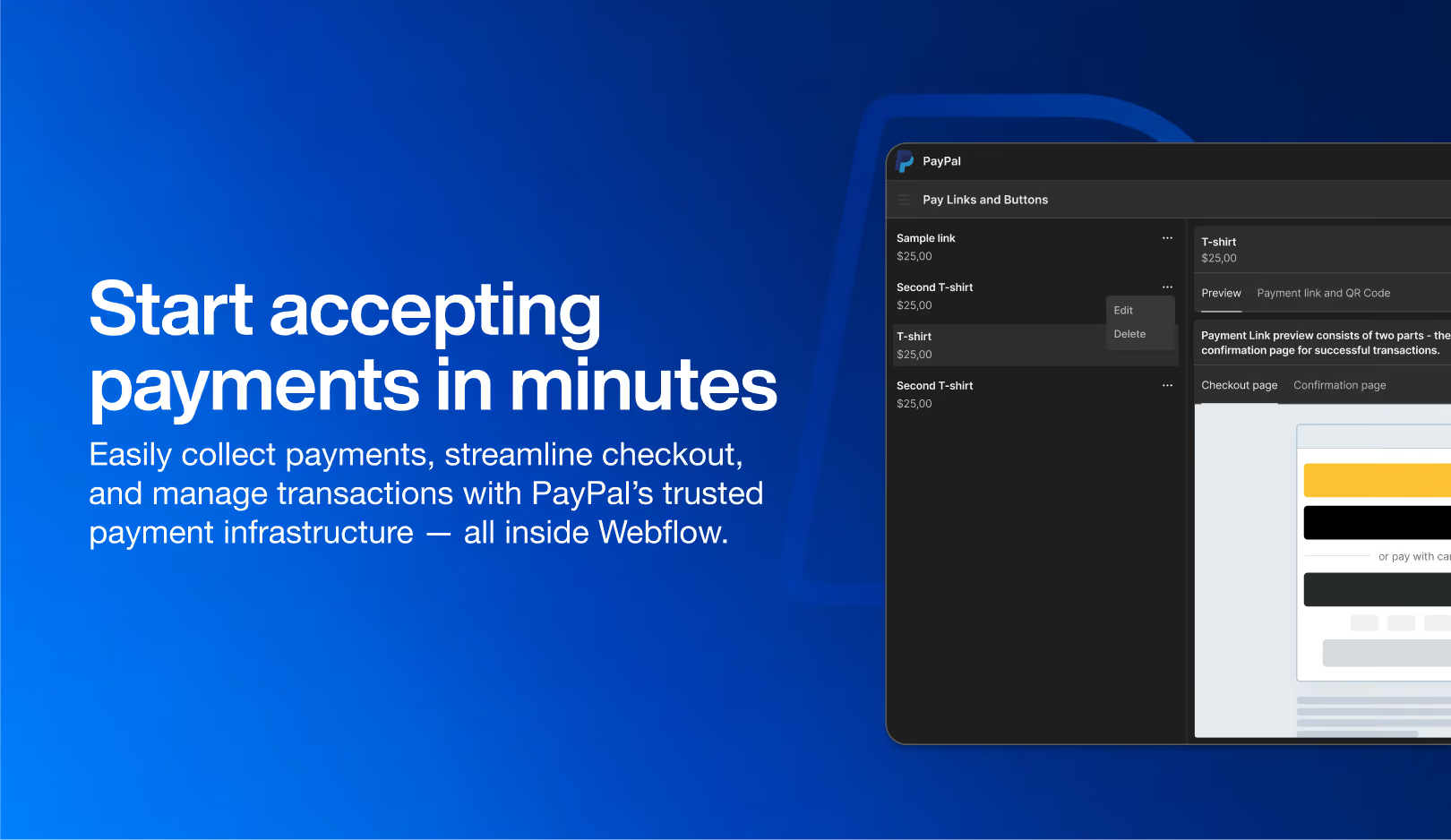
About PayPal
PayPal is one of the most recognized digital payment platforms in the world, processing transactions for businesses and consumers across more than 200 markets. For many merchants, seeing PayPal at checkout signals trust and can reduce hesitation at the point of purchase.

Fintech, digital payments
Industry

10,000+ employees
Company size

San Jose, California, USA
Location

Webflow App Development
Services
The challenge
Webflow handles layout, content, and hosting, but it doesn't natively support every way buyers want to pay. Before this app existed, Webflow users faced a few specific gaps:
- Webflow's native ecommerce settings support only two payment gateways, and the built-in PayPal option doesn't cover subscription billing or buy buttons outside the checkout flow
- Freelancers, service providers, and nonprofits running donation pages had no simple way to accept PayPal, Venmo, or Pay Later on pages outside a full ecommerce cart
- Businesses expanding internationally needed a payment method buyers already trust, without rebuilding their checkout
That's why PayPal brought in Flowout to build a dedicated Webflow Marketplace app that would:
- Work on any page, not just cart and checkout pages
- Support PayPal, Venmo, Pay Later, Apple Pay, and cards behind a single link or button
- Require no coding experience to set up
- Meet all Webflow Marketplace app requirements
Our approach
This was a three-way collaboration between Flowout, PayPal, and Webflow, with each side bringing a different piece of the puzzle.
We started by working closely with the PayPal team to understand the Payment Links and Buttons feature and the use cases it needed to support. Our designer built the initial Figma prototype, while we walked the PayPal team through the full lifecycle of Webflow app development and publishing. PayPal, in turn, brought deep knowledge of how their payments feature works in practice.
From there, the project moved through four phases:
- Discovery and initial UX design in Figma, shaped by PayPal's payment use cases
- Tight, iterative design collaboration with PayPal to refine every part of the solution before implementation began
- Implementation and QA, working directly alongside PayPal's own QA team to catch and resolve usability issues
- Building the product analytics and monitoring stack together, and testing that the solution could run at the scale PayPal required
Webflow's team was involved throughout too, helping us understand how PayPal should fit into the existing Webflow ecosystem and how to communicate that to the app's users.
Key features delivered
Fast setup
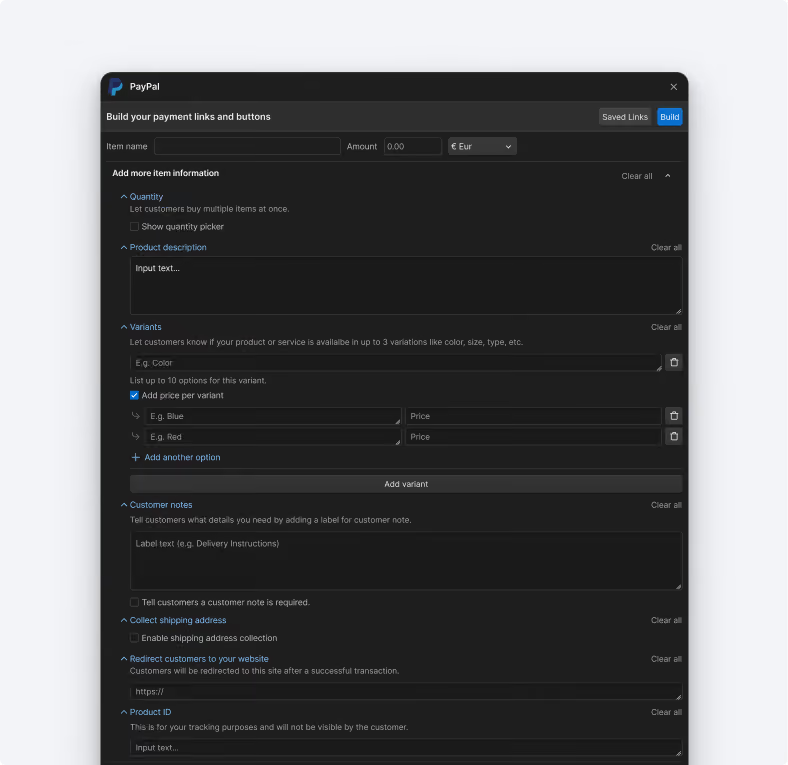
Merchants connect an existing or new PayPal Business account and create payment links directly inside Webflow, with no separate tooling required.
Multiple payment methods in one link
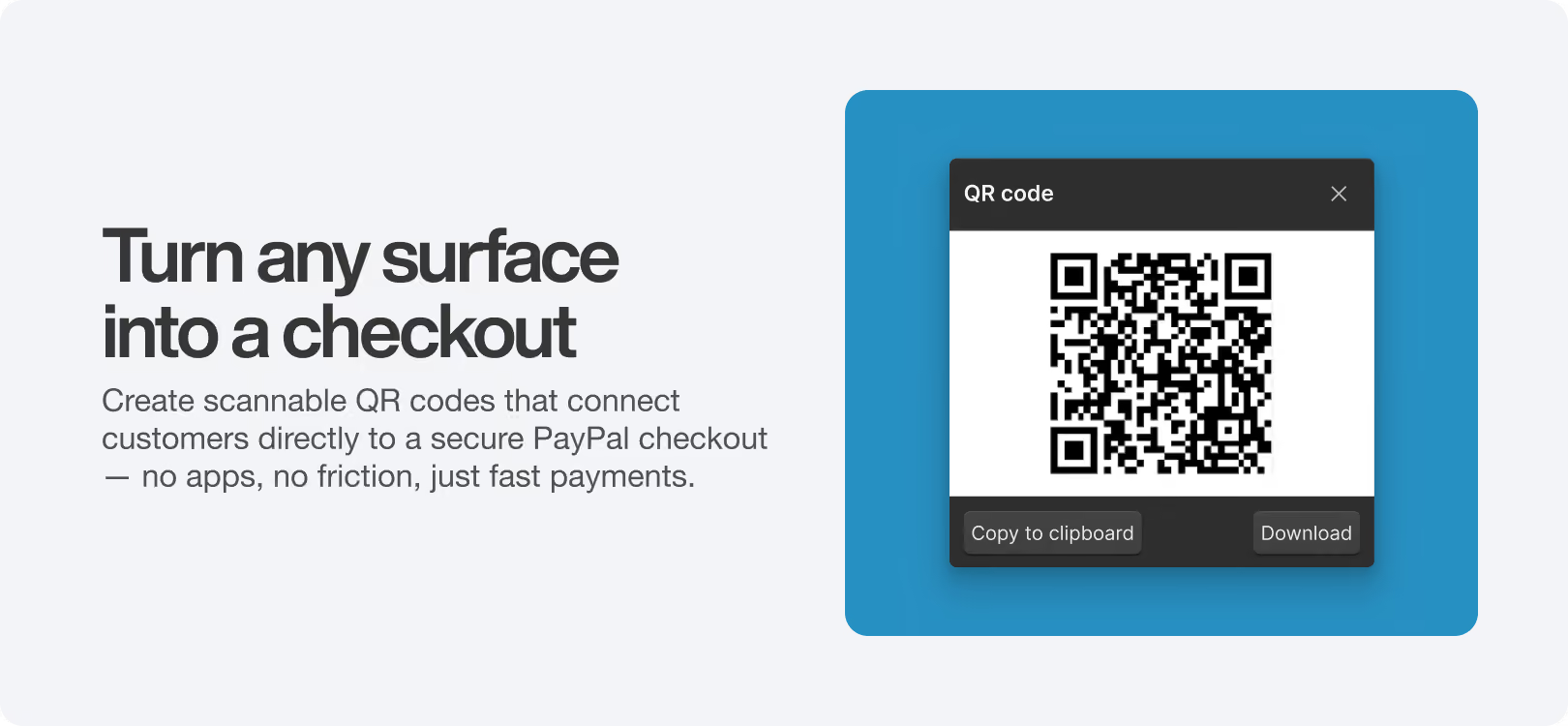
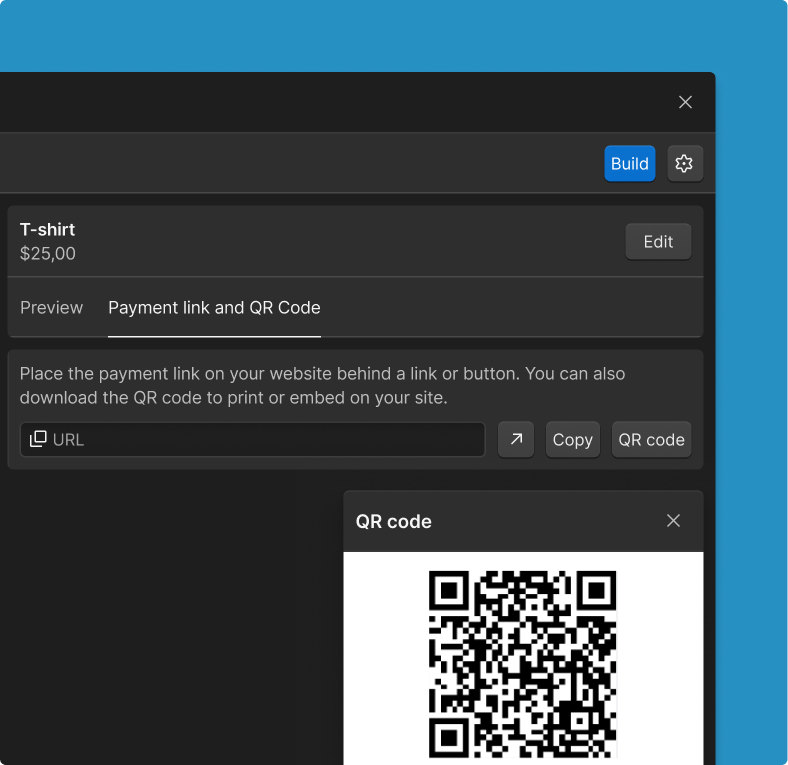
Buyers can pay with PayPal, Venmo (US), Pay Later, Apple Pay, or debit and credit cards through a single embedded link or QR code.
Flexible placement
Links can sit behind a button, a QR code, an image, or plain text, and can go on product pages, blog posts, or landing pages, not just checkout flows.
Rich item details
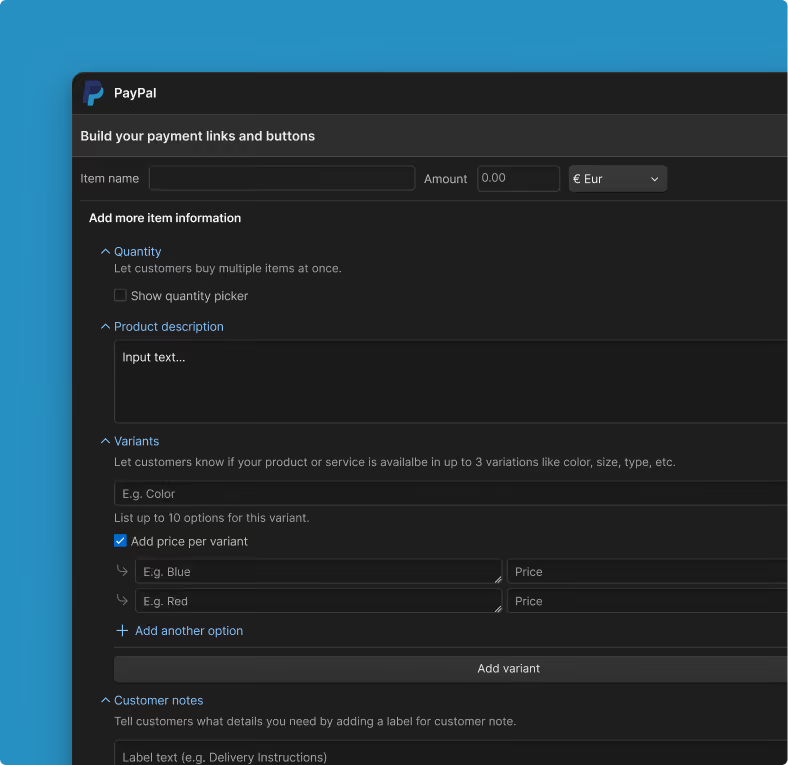
Merchants can add product descriptions, variants, quantity options, shipping fees, and tax rates to each payment link.
Buyer notes
Customers can leave custom notes at checkout, useful for delivery instructions or customization requests.
Built-in protection
PayPal's fraud detection and encryption cover every transaction made through the app.
The results
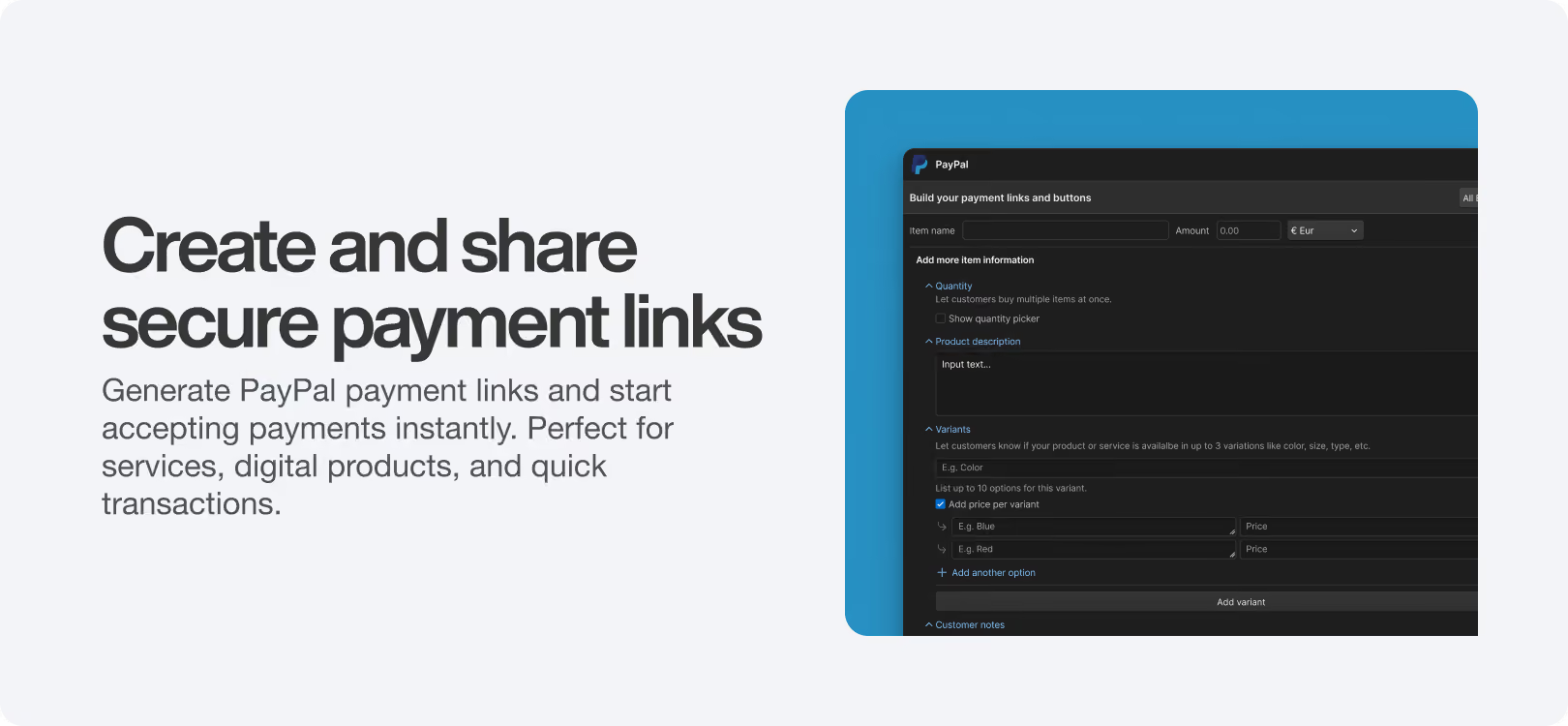
The app is live in the Webflow App Marketplace, giving Webflow users a native way to accept PayPal, Venmo, Pay Later, Apple Pay, and card payments on any page. Merchants can:
- Embed a payment-ready checkout on any page without writing code
- Offer buyers a payment method many already recognize and trust
- Track transactions and manage refunds directly from the PayPal dashboard
Why Flowout
Flowout's experience with Webflow apps goes beyond client work. The team has built and shipped its own Webflow products too, including Optibase, a native A/B and split-testing app used by more than 2,500 teams and agencies, and Vidzflow, a custom video hosting and player solution. Both grew out of problems Flowout ran into on its own client work before becoming standalone products. That firsthand experience building, launching, and maintaining apps in the Webflow Marketplace, on top of client integrations, is what let Flowout guide PayPal through the same process end to end, from initial concept to a live Marketplace listing.


