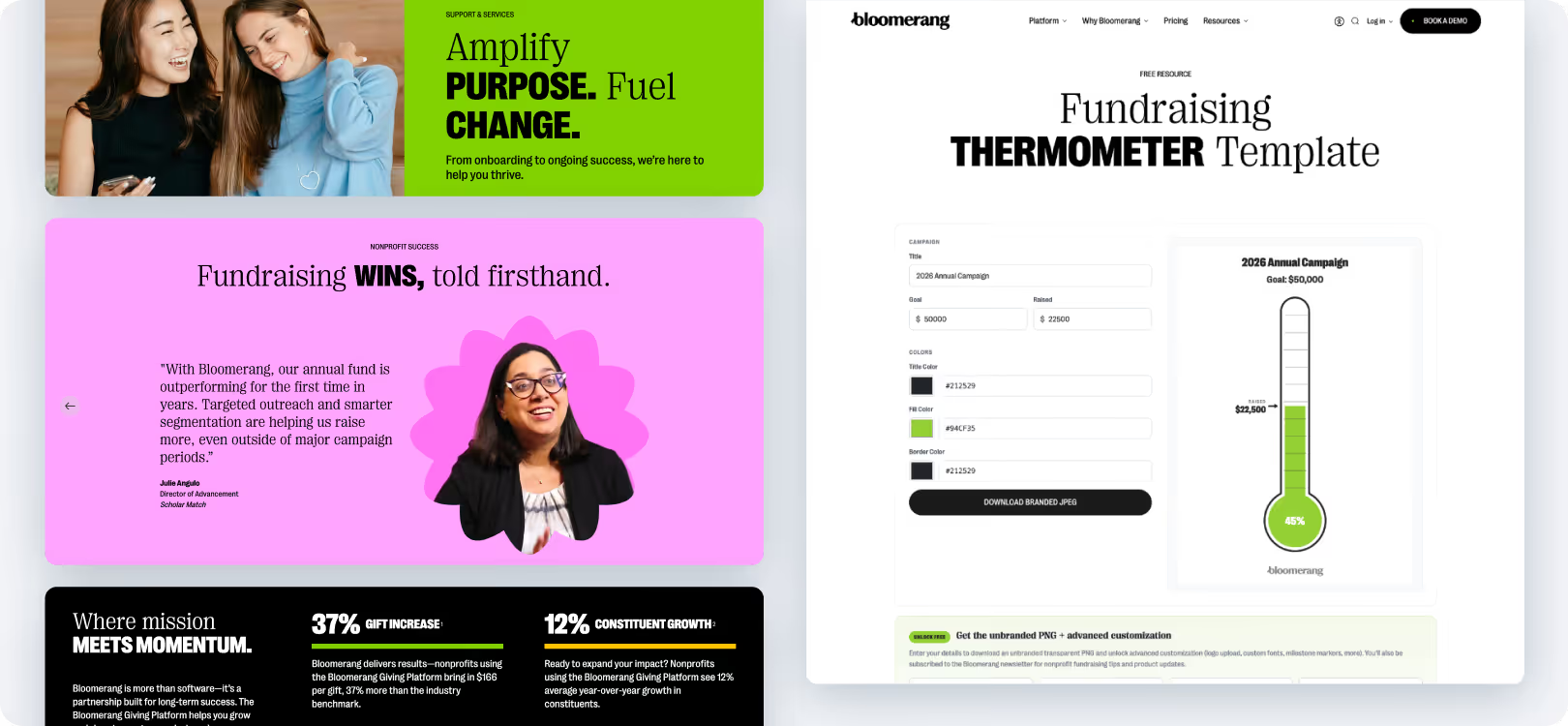
About Bloomerang
Bloomerang is a leading donor management and fundraising platform purpose-built for nonprofits. Trusted by thousands of organizations across the US, Bloomerang helps nonprofits improve donor retention, simplify fundraising operations, and build lasting relationships with supporters. Their platform combines CRM, email marketing, reporting, and online giving tools into a single product - enabling nonprofits of all sizes to do more with less.

Nonprofit SaaS / Donor Management
Industry

51-200 employees
Company size

Indianapolis, Indiana, USA
Location

Migration, Development, Architecture redesign
Services
Challenge
Bloomerang has been running since 2012. Over more than a decade, it has grown into one of the largest content footprints we've migrated: 3000+ URLs: 1300+ blog articles, 550+ webinars, 120+ case studies, 75+ guides, 100+ news URLs - all sitting on WordPress.
The platform was holding the team back in a few specific ways. They wanted to integrate their site with their A/B testing tool and with AI tools like Claude, and WordPress made that harder than it needed to be. More fundamentally, every change required a WordPress developer. The marketing team couldn't move at the speed the business needed.
The site had also been built over years using page builders - a patchwork of independently built pages with no shared templates, no unified system, and no easy way to scale content operations. Bloomerang knew that moving forward meant rethinking the architecture entirely, not just switching platforms.
The scope was significant:
- 3,100 URLs to migrate, redirect, and account for
- 1,300+ blog articles, 550+ webinar, 120+ case studies, 75+ guides, and 100+ news stories to move into a structured CMS
- A legacy WordPress architecture to replace with a component-based Webflow system
- Integrations with A/B testing tools and AI infrastructure to plan for
- A marketing team that needed to move faster, independently, without developer dependencies
Approach
Bloomerang came to Flowout through a referral from their Webflow rep. They interviewed three or four Webflow agencies before making a decision.
What stood out wasn't pitch quality - it was composure. Ryan Ellis describes the deciding factors clearly:
"I think there was that calmness and the understanding of the platform that really attracted us to you guys more so than the others. You guys had those resources when we needed to pull in more people - and we knew this was going to be a big project."
Before a line of Webflow code was written, we mapped the full scope of the site - cataloguing all 3,100 URLs, identifying content types, and grouping pages by structure. What looked like thousands of unique design problems was simplified into a manageable set of reusable templates. The goal wasn't just to move content over - it was to replace years of accumulated complexity with a system that could actually scale.
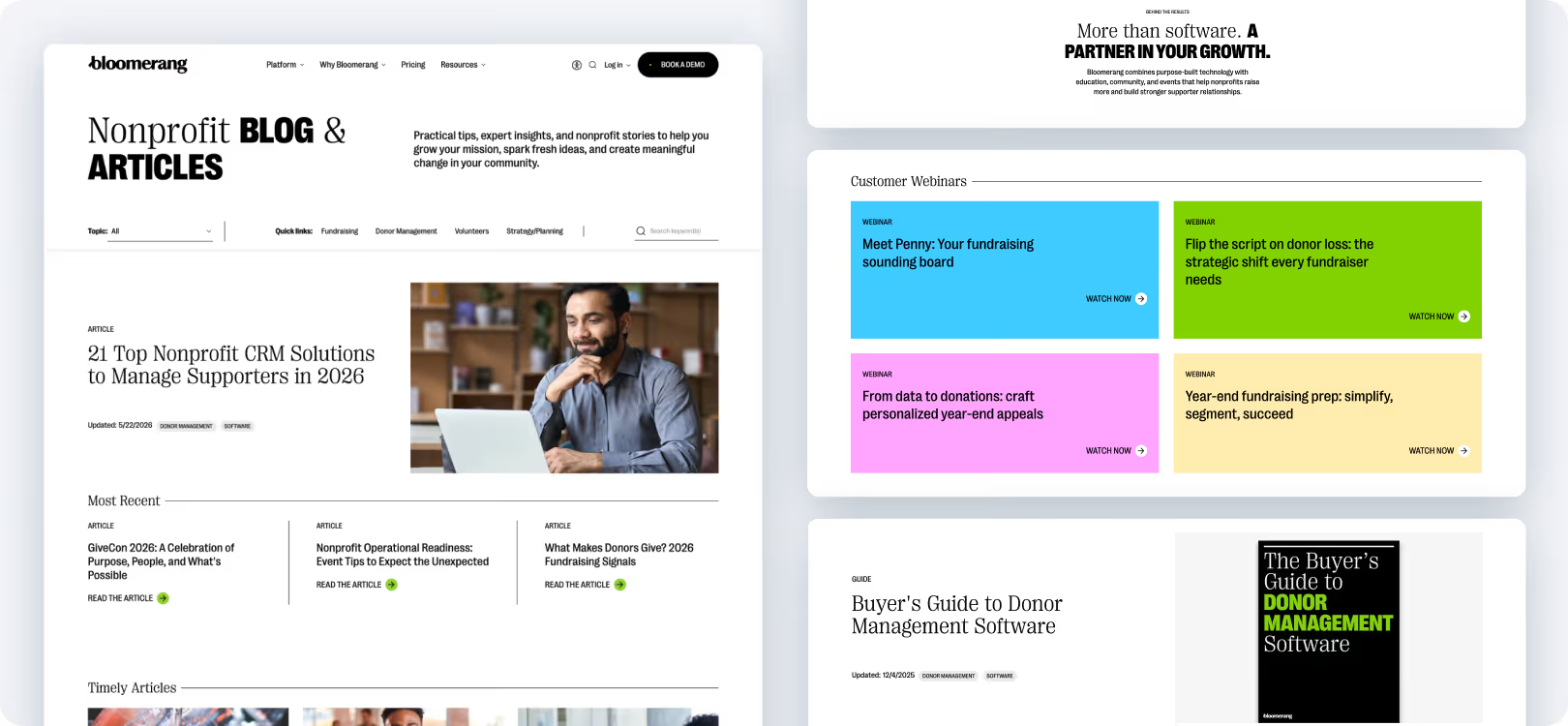
Approach
With the architecture mapped, we structured the migration in phases that prioritized stability, content integrity, and SEO continuity.
Phase 1 - Foundation and design system
Build Webflow's global component library and CMS collection structure from scratch - defining all collection schemas, establishing template sets, and creating the reusable building blocks that would govern the entire site going forward.
Phase 2 - High-priority page migration
Migrate the most business-critical pages first - core conversion flows, product pages, homepage - to validate the new system before content migration began at scale.
Phase 3 - Content migration at scale
Export, clean, and import 1,300+ articles into Webflow's CMS. Verify formatting, preserve internal linking, and ensure all embeds and media rendered correctly in the new environment.
Phase 4 - Remaining pages and redirects
Convert the remaining static pages from WordPress into CMS-driven templates or structured Webflow pages, and map every legacy URL to its new destination with 301 redirects.
Phase 5 - QA, launch, and handoff
Full site QA across devices and browsers, launch coordination, and editorial team handoff with documentation for managing and publishing content independently.
When scope expanded mid-project - as it often does on migrations of this size - the Flowout team pulled in additional resources. At peak, three to four extra people joined to keep the project on track.


Plan
Flowout delivered a complete architectural rebuild of Bloomerang.com - not just a platform switch, but a replacement of 14 years of accumulated complexity with a system built for speed and independence.
Full WordPress to Webflow migration
Every page, article, guide, and resource was accounted for and migrated. All 3,100 URLs were mapped with proper 301 redirects to protect organic rankings and preserve the SEO value of a domain that had been building authority since 2012.
1,300+ articles moved into structured CMS
Every article was exported, cleaned, and imported into Webflow's CMS with metadata and formatting preserved. The new CMS architecture means editors can publish, update, and manage content without touching a developer.
Built for integrations
The new Webflow architecture was scoped to support the A/B testing tool integrations and AI-ready infrastructure that Bloomerang's team was planning for - a platform that would work with their stack, not against it.
Responsive team, on demand
Throughout the project, Bloomerang's team could reach Flowout via Slack at any hour and get a response. When issues surfaced that needed a call, one happened. When scope expanded, more people joined.

Any time of day we could Slack you and Aleksander or the team would hop in. You guys pulled in a ton of resources - I think you guys had like three or four extra people hop in. At the end of the day, we still launched on time. The site's fast and easy for us to get in and make changes to now.

Results
Bloomerang launched with a site their team can actually own and build on.
"Whatever it takes to get to the finish line - that's the same ethos we have here at Bloomerang. That was what I appreciated the most about you guys." -Ryan Ellis, Director of Website Marketing at Bloomerang
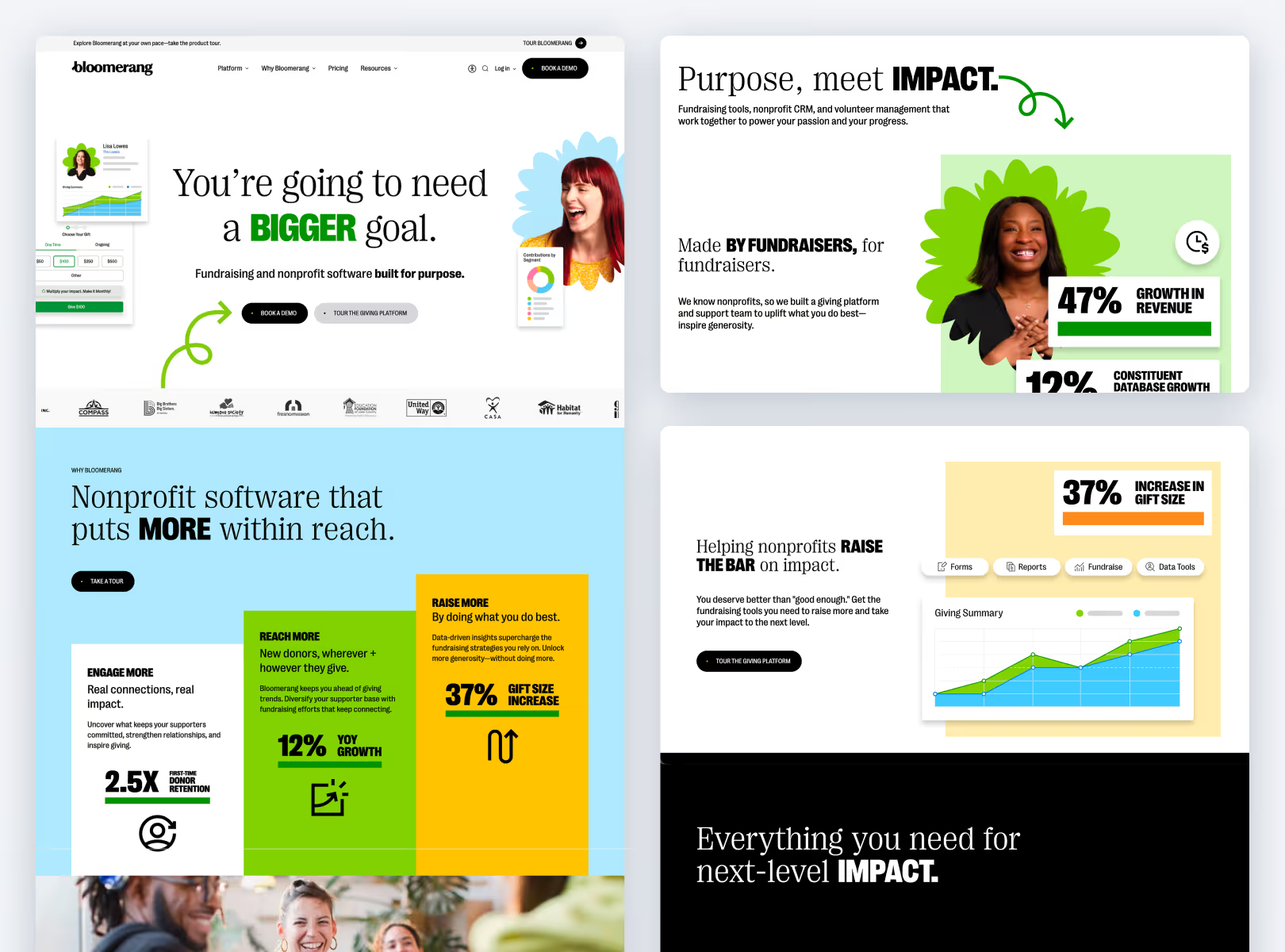
The migration replaced a 14-year-old WordPress build with a Webflow system that's fast, structured, and designed for the marketing team to operate independently. The editorial team can now update pages, publish content, and implement new designs without opening a developer ticket.
- 3,100 URLs migrated to Webflow with full 301 redirect mapping
- 1,300+ blog articles, 550+ webinar, 120+ case studies, 75+ guides, and 100+ news stories moved into structured CMS with preserved formatting and metadata
- Launched on time, despite a scope that expanded during the project
- Site is fast and easy to edit - the team can make changes without developer involvement
- Architecture ready for A/B testing and AI integrations the team is building toward
- Every page built on a reusable template system that makes future content faster and cheaper to produce
"You guys are some of the best at proactive communication, following up with us. Aleksander and the team did a really good job translating what we had on our site over to Webflow - and made it easier for us to implement new designs and animations in the future, too. I would definitely recommend Flowout." -Ryan Ellis, Director of Website Marketing at Bloomerang